Minton Law Firm is proud to serve Fayetteville and the surrounding Arkansas communities with aggressive, knowledgeable personal injury representation. If you or someone you love has been injured in a bicycle accident, you may be facing painful injuries, unexpected medical expenses, lost income, and uncertainty about your future. Our team is here to help you understand your legal rights, stand up to insurance companies, and pursue the compensation you deserve.
Bicycling is a popular way to travel, exercise, and explore Fayetteville. Whether residents are commuting near the University of Arkansas, traveling through downtown, or enjoying the Razorback Regional Greenway, cyclists share public spaces with motorists, pedestrians, and other road users.
Unfortunately, a bicycle ride can become dangerous when a driver fails to pay attention, makes an unsafe turn, or disregards a cyclist's right to use the roadway.
Unlike occupants of passenger vehicles, bicyclists have little physical protection during a collision. Even a relatively low-speed accident can cause broken bones, traumatic brain injuries, spinal damage, or other conditions requiring significant medical treatment.
At Minton Law Firm, we understand that recovering from a bicycle accident involves more than repairing a damaged bike. You may be dealing with medical appointments, missed work, physical limitations, and an insurance company questioning your right to compensation.
Attorney Justin Minton brings a valuable perspective to these cases. As a former insurance adjuster, he understands how insurance companies investigate accidents, evaluate injuries, and approach settlement negotiations. Today, he uses that experience to advocate for injured Arkansans.
If you were injured in a bicycle accident in Fayetteville, contact Minton Law Firm today to schedule your free case evaluation.
After a bicycle accident, your immediate priority should be your health and recovery.
However, legal and insurance questions can quickly become complicated, particularly when the collision involves a motor vehicle.
An insurance adjuster may argue that the cyclist was riding too close to traffic, failed to yield, or should have taken additional precautions to avoid the collision.
These arguments should be evaluated using actual evidence rather than assumptions about cyclists.
A Fayetteville bicycle accident lawyer can help you:
Bicyclists have legal rights when using Arkansas roadways.
Minton Law Firm helps injured cyclists understand those rights and pursue accountability when another party's negligence causes harm.
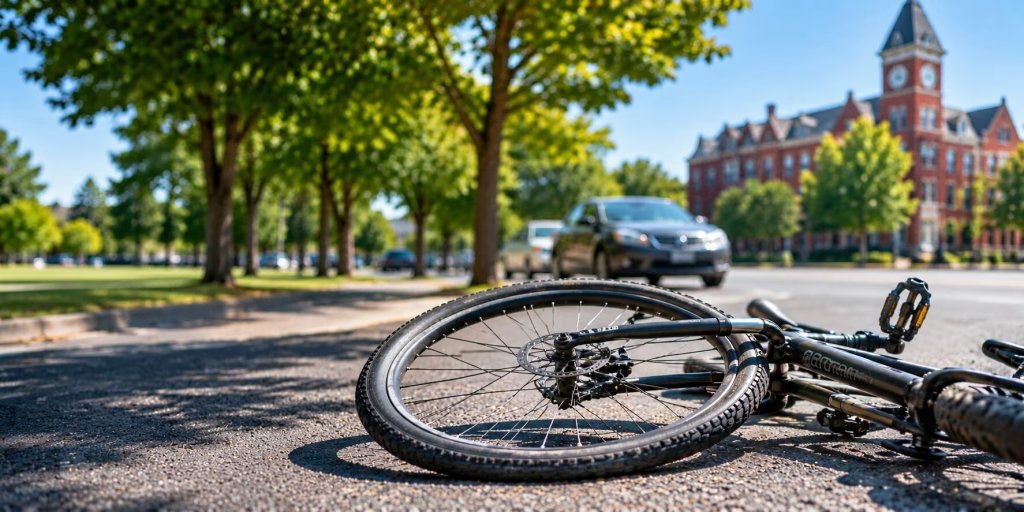
Bicycle accidents can occur for many reasons.
Some involve unsafe driver behavior, while others result from hazardous roadway conditions, mechanical failures, or conflicts between road users.
Understanding the cause of a collision is an important part of establishing liability.
Distracted driving is a serious danger to bicyclists.
Motorists who text, adjust navigation equipment, eat, or become distracted by passengers may fail to notice a nearby cyclist.
Because bicycles are smaller than passenger vehicles, inattentive drivers may overlook them when approaching intersections or changing lanes.
A moment of distraction can lead to a devastating collision.
Drivers who fail to yield at intersections or while turning may strike cyclists traveling lawfully through the area.
For example, a driver turning right may fail to check for a bicycle approaching on the driver's right side.
Whether the driver or cyclist had the right-of-way depends on the circumstances and applicable traffic laws.
Passing too closely can create serious risks for bicyclists.
A motorist who fails to provide adequate clearance may strike the rider directly or force the cyclist toward a curb, parked vehicle, or other hazard.
Drivers must exercise appropriate care when passing bicycles.
A dooring accident occurs when someone opens a vehicle door into the path of an approaching cyclist.
The rider may strike the open door or swerve into traffic while attempting to avoid it.
These collisions may occur on streets with parallel parking, including areas near downtown Fayetteville and the University of Arkansas.
Excessive speed reduces the time drivers have to react to cyclists.
Aggressive passing, tailgating, and unsafe lane changes may increase the likelihood of a serious accident.
Alcohol and drugs can impair judgment, coordination, and reaction time.
An impaired driver may fail to recognize a cyclist, maintain a lane, or respond appropriately at an intersection.
Potholes, loose gravel, debris, uneven pavement, and construction hazards can create dangerous conditions for bicyclists.
Whether another party is legally responsible depends on the hazard, applicable maintenance duties, and other circumstances.
Fayetteville offers a mixture of urban streets, residential neighborhoods, paved trails, and bicycle-friendly transportation routes.
Although these facilities create opportunities for cycling, accidents may occur wherever cyclists interact with vehicles or hazardous conditions.
The Razorback Regional Greenway connects communities throughout Northwest Arkansas.
Cyclists using the trail may encounter roadway crossings, intersections, and other areas where motor vehicles are present.
Drivers approaching bicycle crossings should remain attentive to applicable signals, signs, and right-of-way rules.
The University of Arkansas attracts students, employees, and visitors who travel by bicycle.
Intersections, campus-adjacent streets, parking areas, and surrounding neighborhoods may involve regular interactions between cyclists and motorists.
Downtown Fayetteville includes restaurants, shops, entertainment venues, and streets with pedestrian and bicycle activity.
Drivers opening parked vehicle doors, making turns, or traveling through intersections must exercise reasonable care.
College Avenue is a busy commercial corridor.
Cyclists traveling near intersections or business entrances may encounter turning vehicles and other traffic hazards.
Bicycle accidents also occur on quieter residential streets.
Drivers leaving driveways, backing out of parking spaces, or turning at neighborhood intersections may fail to notice nearby cyclists.
Were you injured while riding your bicycle in Fayetteville? Contact Minton Law Firm for a free consultation and learn more about your legal options.
Bicycle accidents can involve different circumstances and potentially responsible parties.
A collision between a passenger vehicle and a bicycle can cause significant injuries.
These accidents frequently involve unsafe turns, failure to yield, distracted driving, or improper passing.
Commercial trucks have substantial blind spots and require additional space to maneuver.
A collision involving a delivery truck, box truck, or tractor-trailer may result in catastrophic injuries.
Depending on the circumstances, employer liability and commercial insurance coverage may become relevant.
Intersections can create conflicts when drivers or cyclists fail to follow applicable traffic laws.
Traffic signals, witness statements, and available video footage may help establish what happened.
A cyclist may strike a suddenly opened vehicle door or fall while trying to avoid it.
The circumstances surrounding the opened door and the conduct of the parties involved determine potential responsibility.
Some drivers leave the scene after striking a cyclist.
These accidents can create additional challenges when identifying the responsible driver or locating insurance coverage.
Certain accidents involve hazardous roadway conditions or unsafe property features.
Whether a claim is available depends on who controlled the area, applicable legal duties, and the evidence of negligence.
When a bicycle accident results in a fatality because of legally actionable negligence, eligible representatives or family members may have grounds to pursue a wrongful death claim under Arkansas law.
Minton Law Firm recognizes the serious emotional and financial consequences families may face after losing someone they love.
Bicycle accidents can cause serious injuries because riders have limited protection from vehicle impacts and falls.
A traumatic brain injury may occur when a cyclist's head strikes a vehicle, pavement, or another object.
Even cyclists wearing helmets can experience concussions or more serious head injuries.
Symptoms may include headaches, dizziness, confusion, memory problems, and difficulty concentrating.
Severe traumatic brain injuries may result in lasting cognitive or neurological impairment.
Damage to the spinal cord can cause significant neurological complications.
Some victims experience partial or complete paralysis requiring ongoing medical care and rehabilitation.
Bicycle accidents frequently cause fractures involving the wrists, arms, shoulders, collarbones, legs, and pelvis.
Some fractures require surgery or extensive rehabilitation.
When cyclists slide across pavement, friction can damage the skin and underlying tissues.
Serious road rash may require specialized wound treatment.
Sudden impacts may cause herniated discs, ligament damage, muscle injuries, and spinal fractures.
These injuries can interfere with employment and everyday activities.
A collision involving a motor vehicle may cause internal bleeding or damage to organs.
These injuries may require immediate medical attention.
Some bicycle accident victims experience anxiety, depression, sleep disturbances, or fear of riding again.
Minton Law Firm understands that accident injuries can affect physical health, financial stability, and quality of life.
The actions taken after a bicycle accident can help protect your health and preserve important evidence.
Consider the following steps.
Some injuries may become more noticeable hours or days after a collision.
Following medical recommendations can help protect your health and establish a record of your injuries.
Have questions about what to do after a bicycle accident? Reach out to Minton Law Firm today. It starts with a simple phone call.
Arkansas law recognizes bicyclists as legitimate roadway users with important legal rights and responsibilities.
Arkansas Code § 27-51-1802 generally provides that people operating bicycles have the rights and duties applicable to vehicle drivers unless a specific bicycle law changes those requirements or a rule cannot reasonably apply to a bicycle.
This means cyclists must follow applicable traffic laws, while motorists must recognize their lawful presence on the road.
Bicyclists generally may use public roads where bicycle travel is legally permitted.
However, access restrictions may apply to controlled-access highways and other designated roadways.
Cyclists should follow applicable signs, markings, and traffic requirements.
Arkansas has specific bicycle intersection rules under Arkansas Code § 27-51-1803.
A cyclist approaching a stop sign must slow down, stop when necessary to avoid an immediate hazard, and yield to pedestrians and other traffic that lawfully has the right-of-way.
When these conditions are satisfied, the cyclist may cautiously proceed without making a complete stop.
This is different from the ordinary stop-sign requirements for motor vehicles.
Arkansas law also establishes special rules for bicyclists approaching steady red traffic signals.
Generally, a cyclist must come to a complete stop and yield to oncoming traffic presenting an immediate hazard before cautiously proceeding.
The statute includes specific turning provisions and exceptions.
These rules do not give cyclists permission to disregard traffic safety.
Both cyclists and motorists must follow applicable traffic laws and exercise reasonable care.
Arkansas follows a modified comparative fault system under Arkansas Code § 16-64-122.
Generally, an injured person may recover damages when their degree of fault is less than the fault attributed to the party or parties from whom compensation is sought, as specified by the statute.
The amount awarded is reduced according to the injured person's percentage of responsibility.
For example, imagine a cyclist suffers $100,000 in legally recoverable damages after being struck by a vehicle.
If the cyclist is found to be 20% responsible, the recovery may be reduced to $80,000.
If the cyclist's share of fault reaches the applicable statutory threshold, recovery may be barred.
Insurance companies may attempt to argue that a cyclist failed to yield, was distracted, or violated a traffic law.
These allegations must be evaluated using the available evidence.
Minton Law Firm helps injured cyclists understand how Arkansas comparative fault rules may affect their claims.
The potential value of a bicycle accident claim depends on several factors.
These include the severity of the injuries, medical expenses, lost income, future treatment needs, liability, and available insurance coverage.
There is no standard settlement amount for every bicycle accident.
Compensation may include reasonable and necessary medical costs related to the accident.
These expenses can involve:
A serious bicycle injury may prevent someone from returning to work.
Documented income lost during recovery may be recoverable.
Permanent injuries may interfere with a person's ability to perform their previous occupation.
Depending on the evidence, a claim may include diminished future earning capacity.
Physical pain, emotional distress, and reduced quality of life may be relevant to a personal injury claim.
Arkansas law may allow compensation for these losses when supported by the evidence.
A collision may damage or destroy a bicycle.
A claim may include repair or replacement-related losses, along with damaged cycling equipment, subject to applicable law.
Some serious injuries require ongoing treatment, assistance, or specialized rehabilitation.
Reasonably supported future care expenses may be included in a claim.
When a bicycle accident results in a fatality, eligible representatives or family members may have grounds to pursue a wrongful death claim.
Recoverable damages depend on Arkansas law and the specific circumstances.
If you are unsure what your bicycle accident case may be worth, contact Minton Law Firm today for a free consultation.
After a bicycle accident, an insurance adjuster may begin investigating to determine responsibility and evaluate damages.
The adjuster may review police reports, photographs, witness statements, and medical records.
However, insurance companies also have financial interests.
Some insurers may dispute liability or question the severity of injuries to reduce their financial exposure.
Common arguments include:
Consider a hypothetical accident involving a cyclist traveling through an intersection near downtown Fayetteville.
A driver makes a turn without noticing the cyclist and strikes the bicycle.
The insurance company may argue that the rider entered the intersection improperly.
However, witness statements, traffic signals, available video footage, and other evidence may establish that the driver failed to exercise appropriate care.
Attorney Justin Minton's background as a former insurance adjuster provides insight into how insurers evaluate these disputes.
At Minton Law Firm, the focus is on developing evidence-based claims and protecting injured cyclists from unfair insurance tactics.
Many Arkansas personal injury lawsuits arising from bicycle accidents are generally subject to a three-year statute of limitations.
Arkansas Code § 16-56-105 establishes a three-year limitations period applicable to many such claims.
However, the exact filing deadline depends on the legal circumstances, including when the claim accrues, the parties involved, and any applicable exceptions.
Claims involving government entities, minors, or other special circumstances may involve additional requirements.
Missing an applicable filing deadline can prevent an injured person from pursuing compensation through the courts.
Even when the deadline appears distant, waiting can create problems.
Witnesses may forget details, video footage may be overwritten, and physical evidence may become unavailable.
Speaking with an attorney promptly can help identify the applicable deadlines and preserve important evidence.
The legal process can feel overwhelming when you are recovering from injuries.
Minton Law Firm works to make each stage understandable.
The process begins with a conversation about your accident.
You can explain what happened, describe your injuries, and ask questions about available legal options.
The team reviews available evidence to determine how the collision occurred.
This may include police reports, witness statements, photographs, roadway conditions, and available video footage.
The investigation helps determine whether a driver, business, or another party may be legally responsible.
Arkansas bicycle traffic laws and comparative fault rules may be relevant.
Medical expenses, lost income, future treatment needs, and other legally recoverable losses are evaluated.
Minton Law Firm communicates with insurance companies and pursues settlement discussions supported by the evidence.
Not every bicycle accident claim requires a lawsuit.
However, litigation may become appropriate when settlement negotiations do not produce an acceptable resolution.
Minton Law Firm helps clients understand their options and make informed decisions.
Choosing a personal injury attorney means finding someone who understands Arkansas law and recognizes the challenges injured cyclists face.
Minton Law Firm provides straightforward legal guidance focused on protecting injured individuals from unfair insurance practices.
Attorney Justin Minton previously worked as an insurance adjuster.
That experience provides insight into how insurers investigate collisions, evaluate medical documentation, and negotiate settlements.
Today, he uses that perspective to advocate for injured individuals.
Minton Law Firm serves Fayetteville, Washington County, and surrounding Northwest Arkansas communities.
The firm understands the importance of applying Arkansas personal injury law to the facts of each case.
Every bicycle accident case is different.
Some cyclists recover after temporary treatment, while others face permanent injuries and extensive rehabilitation.
Minton Law Firm focuses on understanding each client's circumstances, injuries, and financial concerns.
Minton Law Firm offers free personal injury consultations and handles qualifying cases on a contingency fee basis.
Attorney fees generally depend on a successful financial recovery, subject to the written fee agreement.
You do not have to fight the insurance company alone. Contact Minton Law Firm in Fayetteville today to schedule your free case evaluation.
After a bicycle accident in Fayetteville, you may have questions about your legal rights, insurance coverage, and potential compensation. Below, Minton Law Firm answers common questions about Arkansas bicycle accident claims, liability, and the steps you can take to protect your interests.
Not every bicycle accident requires legal representation.
However, an attorney may be valuable when injuries are serious, liability is disputed, or insurance coverage is complicated.
A lawyer can investigate the collision, evaluate damages, and explain available legal options.
Possibly.
Arkansas law generally recognizes bicyclists' rights to use public roadways where cycling is permitted.
Whether a claim is available depends on the circumstances and evidence of negligence.
A driver's failure to notice a cyclist does not automatically eliminate responsibility.
Motorists must exercise reasonable care and remain aware of surrounding traffic.
Evidence may help establish whether the driver acted negligently.
The value depends on injury severity, medical expenses, lost income, future treatment needs, liability, and available insurance coverage.
A case evaluation can help identify potentially recoverable damages.
Possibly.
Arkansas comparative fault law may allow compensation when your percentage of responsibility is below the applicable statutory threshold.
However, the recovery may be reduced according to your share of fault.
Possibly.
Not wearing a helmet does not automatically prevent a cyclist from pursuing compensation.
The legal significance depends on applicable requirements, the injuries involved, and whether helmet use contributed to the claimed damages.
A hit-and-run bicycle accident may create additional challenges.
Depending on the circumstances and available insurance coverage, compensation may still be possible.
Prompt reporting and evidence preservation are important.
A child injured because of another party's negligence may have grounds for a personal injury claim.
Claims involving minors can involve special legal requirements and filing deadline considerations.
The timeline depends on injury recovery, evidence collection, liability disputes, insurance negotiations, and whether litigation becomes necessary.
Some claims resolve through settlement negotiations, while others require court proceedings.
Yes. Minton Law Firm offers free personal injury consultations.
During the consultation, you can explain your accident, ask questions, and discuss potential next steps.
A bicycle accident can leave you dealing with painful injuries, mounting medical bills, and uncertainty about your future.
You may be worried about returning to work, continuing medical treatment, or managing your responsibilities while recovering.
You deserve an opportunity to understand your legal rights and pursue compensation when another party's negligence causes harm.
Minton Law Firm represents injured individuals throughout Fayetteville, Washington County, and surrounding Northwest Arkansas communities. Whether your bicycle accident occurred near the University of Arkansas, along College Avenue, on a neighborhood street, or at a roadway crossing near the Razorback Regional Greenway, our team can review your circumstances and explain your options.
Attorney Justin Minton's background as a former insurance adjuster provides insight into how insurance companies evaluate bicycle accident claims and approach settlement negotiations.
At Minton Law Firm, the focus is on protecting injured cyclists, providing clear guidance, and pursuing compensation supported by the evidence.
The insurance company has a team working against you. You deserve one working for you.
Call Minton Law Firm today at (479) 265-5001 to schedule your free consultation, and let's start building your case together.
"*" indicates required fields

"*" indicates required fields
