After an accident, many people assume the insurance company will automatically pay for their injuries if the other person was clearly at fault. Unfortunately, that is rarely how personal injury claims work.
Insurance companies base their decisions on evidence. The stronger your evidence, the stronger your claim may be. Whether you were injured in a car accident, truck accident, motorcycle crash, slip and fall, dog bite, workplace accident, or another negligence-related incident, documenting what happened is one of the most important steps you can take.
At Minton Law Firm, we help injury victims throughout Arkansas gather, preserve, and present the evidence needed to pursue fair compensation. Attorney Justin Minton previously worked as an insurance adjuster, giving him valuable insight into how insurance companies evaluate claims and what evidence carries the most weight.
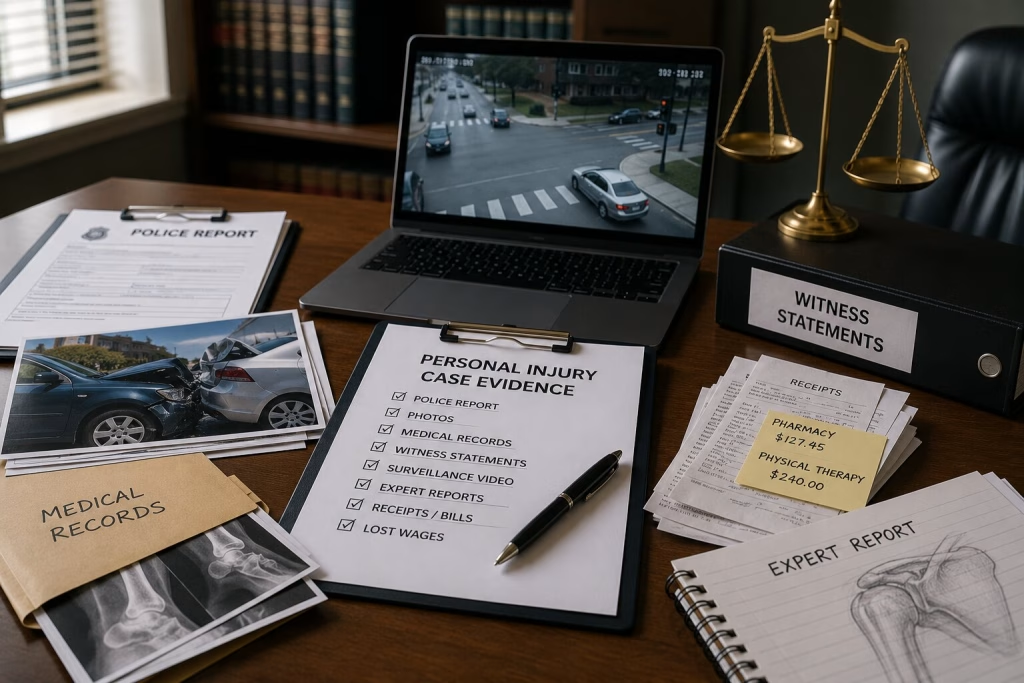
Personal injury cases are built on facts—not assumptions.
Even when liability seems obvious, the insurance company will often investigate questions such as:
Evidence answers these questions and helps establish liability and the full extent of your losses.
Have questions? Reach out today.
Every case is unique, but certain types of evidence appear frequently in successful personal injury claims.
After a motor vehicle accident, responding law enforcement officers typically prepare an accident report.
These reports may include:
Although an accident report is not always the final word on liability, it often becomes an important starting point for the investigation.
Visual evidence can preserve details that may disappear within hours.
If you are physically able, photograph:
Videos from cell phones, dashboard cameras, nearby businesses, or residential security cameras can also provide valuable evidence.
Medical documentation is one of the most important pieces of evidence in any injury claim.
Records may include:
Seeking prompt medical treatment not only protects your health but also creates documentation connecting your injuries to the accident.
Diagnostic studies often help establish the severity of an injury.
Examples include:
For traumatic brain injuries or spinal cord injuries, these records may become critical evidence when calculating long-term damages.
Independent witnesses often provide unbiased accounts of how an accident occurred.
Witnesses may describe:
Because memories fade over time, obtaining witness information as early as possible is important.
Let's discuss your options—it starts with a simple phone call.
If your injuries prevent you from working, employment records may help establish financial losses.
Helpful documentation includes:
These records can support claims for lost wages and diminished earning capacity.
Compensation should reflect more than medical treatment alone.
Keep records of:
These expenses may be recoverable depending on your case.
Sometimes physical objects themselves become important evidence.
Examples include:
Do not repair or dispose of these items before speaking with an attorney whenever possible.
Technology now plays a major role in many personal injury cases.
Electronic evidence may include:
This type of evidence can sometimes establish distracted driving, speeding, or other negligent behavior.
Some personal injury cases require opinions from qualified experts.
Experts may include:
Expert analysis can help explain complicated issues to insurance companies or juries.
Many people overlook the value of documenting their recovery.
Keeping a journal can help show how injuries affect your daily life.
Consider documenting:
These details often provide important context that medical records alone cannot capture.
Insurance companies often look for weaknesses in a claim.
Avoid these common mistakes:
Preserving evidence early can significantly improve the strength of your case.
Evidence can disappear quickly.
Minton Law Firm acts promptly to preserve critical information by:
Our goal is to present the strongest possible claim from the very beginning.
There is no single piece of evidence that determines every case. Medical records, accident reports, photographs, witness statements, and other documentation often work together to establish liability and damages.
Yes. Conditions at the accident scene can change quickly. Photographs taken immediately after an accident may become valuable later.
Absolutely. Traffic cameras, business security systems, and residential cameras sometimes capture important details about how an accident occurred.
You may still have a claim. While accident reports are helpful, other evidence—including medical records, witness testimony, photographs, and expert analysis—can also establish liability.
Keep all accident-related records, photographs, receipts, and correspondence until your claim is fully resolved. Your attorney can advise you regarding specific documentation.
Before providing records or signing authorizations, it is often wise to speak with an attorney. Insurance companies may request information that extends beyond what is necessary to evaluate your claim.
The success of a personal injury claim often depends on the quality of the evidence supporting it. Acting quickly to preserve records, document injuries, and protect important information can make a meaningful difference in the outcome of your case.
If you've been injured because of someone else's negligence anywhere in Arkansas, Minton Law Firm can help investigate your case, preserve critical evidence, and pursue the compensation you deserve.
Call Minton Law Firm today to schedule your free consultation.
You don't have to fight the insurance company alone—contact Minton Law Firm now.
The insurance company has a team working against you. You deserve one working for you. Call Minton Law Firm today to schedule your free consultation—and let's start building your case together.

"*" indicates required fields