Minton Law Firm is proud to serve Fayetteville and the surrounding Arkansas communities with aggressive, knowledgeable personal injury representation. If you or someone you love has suffered a traumatic brain injury because of another party's negligence, you may be facing overwhelming medical expenses, lost income, and uncertainty about the future. Our team is here to help you understand your legal rights, stand up to insurance companies, and pursue the compensation you deserve.
A traumatic brain injury can change someone's life in seconds. Whether the injury results from a car accident, motorcycle collision, serious fall, or workplace incident, the consequences may extend far beyond the initial emergency room visit.
Some individuals recover with appropriate treatment and time. Others experience persistent headaches, memory problems, difficulty concentrating, personality changes, or permanent disabilities that affect their ability to work and participate in everyday activities.
Throughout Fayetteville and Washington County, serious accidents can happen along Interstate 49, College Avenue, Martin Luther King Jr. Boulevard, and other busy roadways. Brain injuries may also occur in businesses, apartment complexes, workplaces, and other properties where unsafe conditions create preventable dangers.
At Minton Law Firm, we understand that brain injury victims and their families need more than help completing insurance paperwork. They need clear answers, dependable legal guidance, and someone willing to protect their interests during a difficult recovery.
Attorney Justin Minton brings a valuable perspective to personal injury cases. As a former insurance adjuster, he understands how insurance companies investigate accidents, evaluate medical records, and approach settlement negotiations. Today, he uses that experience to advocate for injured Arkansans.
If you or a loved one suffered a traumatic brain injury in Fayetteville, contact Minton Law Firm today to schedule your free case evaluation.
A traumatic brain injury, often called a TBI, occurs when an external force disrupts the brain's normal functioning.
According to the Centers for Disease Control and Prevention, a traumatic brain injury may result from a bump, blow, or jolt to the head or a forceful impact to the body that causes the brain to move rapidly inside the skull.
These injuries can affect memory, concentration, movement, behavior, emotions, and other important functions.
Traumatic brain injuries range from mild concussions to severe damage that may cause permanent disability or death.
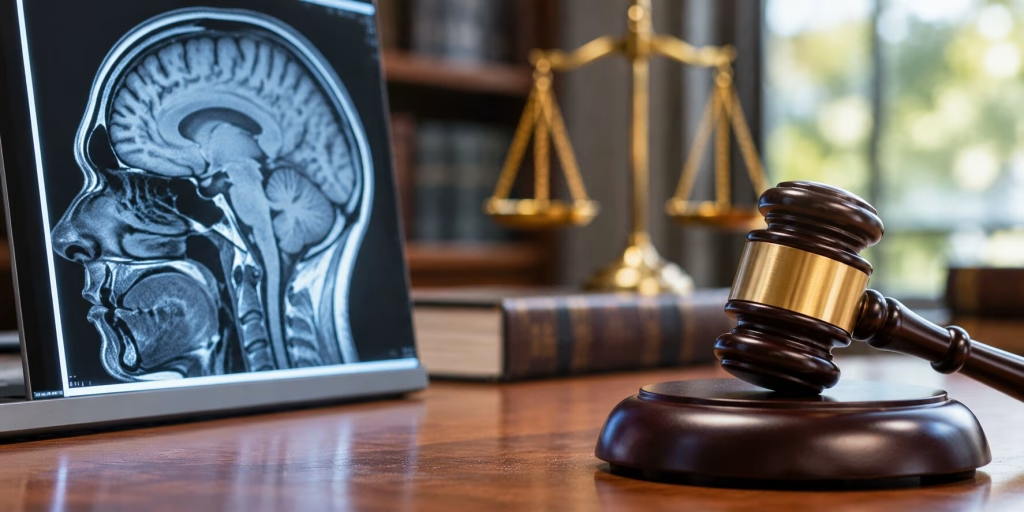
A mild traumatic brain injury commonly involves a concussion.
Although the term mild refers to the clinical classification of the injury, symptoms can still significantly affect everyday life.
Some individuals experience headaches, dizziness, fatigue, sensitivity to light, or difficulty concentrating.
Many people improve within weeks, but others experience symptoms that last much longer.
Moderate traumatic brain injuries generally involve more significant disruption to brain function.
Victims may experience prolonged confusion, memory problems, neurological symptoms, or difficulties performing everyday activities.
Treatment may involve hospitalization, rehabilitation, and continued medical monitoring.
Severe traumatic brain injuries can cause extensive damage to brain tissue.
Some victims experience lasting cognitive impairment, physical disabilities, communication difficulties, or substantial changes in behavior.
These injuries may require lifelong medical treatment, assistance with daily activities, or specialized residential care.
Minton Law Firm recognizes that every brain injury is different and that legal claims must consider each person's unique circumstances.
Traumatic brain injuries can occur during many types of accidents.
When another party's negligence contributes to the injury, the victim may have grounds to pursue a personal injury claim.
Car accidents in Fayetteville are a common source of traumatic brain injuries.
A sudden collision can cause a person's head to strike a window, steering wheel, dashboard, or another object.
Even when there is no direct impact to the head, rapid acceleration or deceleration may cause the brain to move forcefully inside the skull.
Accidents involving distracted driving, speeding, impaired driving, or failure to yield may result in serious neurological injuries.
Minton Law Firm assists individuals injured in car accidents throughout Fayetteville and surrounding Arkansas communities.
Motorcyclists have limited physical protection during collisions.
When a rider is thrown from a motorcycle or strikes another vehicle, the resulting head trauma may cause a serious brain injury.
Wearing a helmet can reduce the risk of severe head injuries, but it cannot eliminate every possibility of a traumatic brain injury.
Commercial truck collisions can involve tremendous forces because of the size and weight of these vehicles.
Victims may experience significant head trauma during collisions involving tractor-trailers, delivery trucks, and other commercial vehicles.
These cases may also involve complicated liability questions and multiple insurance policies.
A person who falls and strikes their head against a hard surface may suffer a traumatic brain injury.
Hazardous conditions such as wet floors, damaged stairs, uneven sidewalks, or poorly maintained walkways may contribute to these accidents.
A property owner or another responsible party may face liability when a dangerous condition results from legally actionable negligence.
Pedestrians struck by motor vehicles are particularly vulnerable to head injuries.
The impact may cause a person to strike the vehicle, pavement, or another object.
Some pedestrian brain injuries result in significant long-term medical needs.
A bicyclist may suffer a brain injury after being struck by a vehicle or falling because of a dangerous roadway condition.
These accidents can occur at intersections, roadway crossings, and other areas where cyclists interact with motorists.
Traumatic brain injuries may occur when workers fall from heights, are struck by equipment, or experience other serious incidents.
Work-related brain injuries may involve Arkansas workers' compensation benefits.
Depending on the circumstances, a separate personal injury claim against a negligent third party may also be possible.
If your brain injury resulted from someone else's negligence, contact Minton Law Firm today to discuss your legal options during a free consultation.
Traumatic brain injury symptoms vary depending on the severity of the injury and the individual affected.
Some symptoms appear immediately, while others develop hours or days after the accident.
Common symptoms include:
More serious brain injuries may cause seizures, severe confusion, loss of consciousness, weakness, or other neurological complications.
Seek emergency medical attention if someone develops a worsening headache, repeated vomiting, seizures, significant confusion, unusual behavior, weakness, unequal pupils, or difficulty waking after a head injury.
Prompt medical evaluation is important because serious complications may not always be immediately apparent.
A traumatic brain injury may affect much more than a person's immediate physical health.
For some victims, recovery involves learning how to manage lasting limitations and adjusting to significant changes in everyday life.
Brain injuries can interfere with short-term memory, attention, learning, and problem-solving.
A person who previously performed complex professional responsibilities may struggle to concentrate or remember important information.
These difficulties may affect work, education, and personal relationships.
Some traumatic brain injury victims experience mood swings, irritability, depression, anxiety, or changes in emotional regulation.
These symptoms can be difficult for both the injured person and their family.
Certain brain injuries affect coordination, balance, muscle control, and mobility.
Victims may require physical therapy, assistive equipment, or help performing everyday tasks.
Returning to work may be difficult when an injury affects memory, concentration, physical coordination, or stamina.
Some victims need workplace accommodations, reduced schedules, or a different occupation.
Others may be unable to return to employment.
Serious brain injuries may require continued treatment from neurologists, rehabilitation specialists, occupational therapists, and other medical professionals.
Some individuals also need assistance with personal care or household activities.
These consequences can create substantial financial challenges for injured individuals and their families.
Minton Law Firm understands the importance of considering future needs when evaluating a traumatic brain injury claim.
Determining liability is an important part of pursuing compensation after a traumatic brain injury.
A serious injury does not automatically establish that someone else is legally responsible.
Generally, a personal injury claim requires evidence that another party breached an applicable legal duty and caused the resulting harm.
Potentially responsible parties may include:
Consider a hypothetical accident involving a driver traveling along College Avenue in Fayetteville.
The driver becomes distracted and runs a red light, colliding with another vehicle.
The injured driver suffers a traumatic brain injury that causes ongoing memory difficulties and prevents a return to work.
An investigation may involve examining traffic signals, witness statements, accident reports, medical records, and available surveillance footage.
If the evidence establishes that the distracted driver's negligence caused the injuries, the victim may have grounds to pursue compensation.
Minton Law Firm investigates the circumstances surrounding serious accidents to identify potentially responsible parties and available sources of recovery.
Traumatic brain injury claims often require detailed evidence because some symptoms are difficult to observe from the outside.
A person may appear physically healthy while experiencing significant cognitive or emotional limitations.
Insurance companies sometimes challenge these injuries when diagnostic imaging does not reveal an obvious abnormality.
However, not every brain injury is visible on a CT scan or MRI.
Important evidence may include:
Medical records help document symptoms, diagnoses, treatment, and recovery progress.
They may also help establish the connection between an accident and the brain injury.
Neuropsychological testing evaluates certain cognitive functions, including memory, attention, reasoning, and information processing.
Healthcare professionals may use these assessments to better understand the effects of a traumatic brain injury.
Yes.
Family members may notice changes in memory, personality, behavior, or daily functioning that are not immediately apparent during medical appointments.
Their observations may provide useful supporting information.
For example, a spouse may explain that the injured person now struggles to manage household finances or remember appointments.
These observations can help demonstrate how the injury affects everyday life.
Have questions about proving a traumatic brain injury claim? Contact Minton Law Firm today to discuss your situation and potential next steps.
There is no standard settlement amount for traumatic brain injury cases.
The potential value depends on the severity of the injury, medical expenses, lost income, long-term care needs, liability, insurance coverage, and other circumstances.
Compensation may include reasonable and necessary accident-related medical costs such as:
A traumatic brain injury may prevent someone from working during recovery.
Documented income lost because of the injury may be recoverable.
Some individuals cannot return to their previous occupations because of lasting cognitive or physical limitations.
Compensation may be available for diminished future earning capacity when supported by appropriate evidence.
Traumatic brain injuries can cause physical pain, emotional distress, and significant disruption to everyday life.
Arkansas law may allow compensation for legally recognized noneconomic losses.
Severe brain injuries may require assistance with daily activities, home modifications, medical equipment, or professional caregiving services.
Reasonably supported future care expenses may be included in a claim.
An injured person may be unable to participate in hobbies, recreational activities, or important family experiences.
These consequences may be considered when evaluating legally recoverable noneconomic damages.
When a traumatic brain injury results in death because of another party's legally actionable conduct, eligible representatives or family members may have grounds to pursue a wrongful death claim.
Arkansas Code § 16-62-102 addresses wrongful death actions and certain related damages.
The available compensation depends on the circumstances and applicable legal requirements.
Arkansas follows a modified comparative fault system under Arkansas Code § 16-64-122.
Generally, an injured person may recover damages when their degree of fault is less than the fault attributed to the party or parties from whom recovery is sought, as specified by the statute.
The amount awarded is reduced according to the injured person's percentage of responsibility.
For example, imagine a traumatic brain injury victim suffers $200,000 in legally recoverable damages.
If the victim is found to be 20% responsible for the accident, the recovery may be reduced to $160,000.
If the injured person's share of fault reaches the applicable statutory threshold, compensation may be barred.
Insurance companies may attempt to shift responsibility for an accident to reduce their financial exposure.
Minton Law Firm evaluates the evidence and helps clients understand how Arkansas comparative fault law may affect their claims.
Traumatic brain injury claims may involve significant financial damages, particularly when victims require long-term medical care or experience permanent disabilities.
Insurance companies may investigate these claims carefully and challenge aspects of the evidence.
Common disputes include:
Some insurance companies may argue that a person with normal-looking imaging results could not have suffered a significant injury.
However, brain injury diagnosis and evaluation can involve much more than imaging alone.
Consider a hypothetical situation in which a Fayetteville resident suffers a concussion in a rear-end collision.
Although the initial medical imaging does not reveal bleeding or another visible abnormality, the injured person continues experiencing headaches, memory problems, and difficulty concentrating.
The insurance company may argue that the symptoms should have resolved quickly.
However, continued medical evaluations, neuropsychological testing, treatment documentation, and evidence of everyday limitations may provide a more complete understanding of the injury.
Attorney Justin Minton's experience as a former insurance adjuster provides insight into how insurers evaluate these claims.
At Minton Law Firm, the focus is on gathering appropriate evidence and protecting clients from unfair insurance practices.
Many Arkansas personal injury lawsuits are generally subject to a three-year statute of limitations.
Arkansas Code § 16-56-105 establishes a three-year limitations period applicable to many negligence-based personal injury claims.
However, the exact deadline depends on the legal circumstances, including when the claim accrues, the parties involved, and any relevant exceptions.
Claims involving medical negligence, government entities, minors, or other special circumstances may be subject to different rules and deadlines.
Importantly, a traumatic brain injury's long recovery period does not automatically extend the time available to file a lawsuit.
Missing an applicable deadline may prevent an injured person from pursuing compensation through the courts.
Speaking with an attorney promptly can help determine which deadline applies and what evidence should be preserved.
If you suspect that you or someone you love has suffered a brain injury, protecting your health should be the first priority.
Consider the following steps.
Brain injury recovery varies significantly from one individual to another.
A healthcare professional can provide recommendations based on the specific injury and symptoms.
The legal process can feel overwhelming when someone is recovering from a serious neurological injury.
Minton Law Firm works to provide clear guidance throughout the case.
The process begins with a discussion about the accident and resulting injuries.
Clients and their families can ask questions about potential legal options.
The team reviews available evidence to determine how the injury occurred and whether another party may be responsible.
Medical documentation helps establish the nature of the injury, treatment requirements, and ongoing limitations.
Depending on the circumstances, evaluations from qualified medical professionals may be important.
Medical expenses, lost income, future care requirements, and other legally recoverable damages are considered.
Minton Law Firm communicates with insurers and pursues settlement discussions supported by the evidence.
Not every traumatic brain injury claim requires a lawsuit.
However, litigation may become appropriate when negotiations do not produce an acceptable resolution.
Minton Law Firm helps clients understand the potential risks and available next steps.
Choosing an attorney after a serious brain injury is an important decision.
You need representation that understands Arkansas personal injury law and recognizes the challenges involved in documenting injuries that may not be immediately visible.
Attorney Justin Minton previously worked as an insurance adjuster.
That experience provides insight into how insurance companies investigate accidents, review medical documentation, and evaluate settlement claims.
Today, he uses that understanding to advocate for injured individuals.
Minton Law Firm serves Fayetteville, Washington County, and surrounding Northwest Arkansas communities.
With a nearby office in Farmington, the firm offers Arkansas personal injury representation to individuals and families dealing with serious accidents.
Every traumatic brain injury is different.
Some clients experience temporary symptoms, while others face long-term disabilities, rehabilitation, and significant financial challenges.
Minton Law Firm focuses on understanding each client's circumstances and explaining their legal options.
Minton Law Firm offers free personal injury consultations and handles qualifying personal injury claims on a contingency fee basis.
Attorney fees generally depend on a successful financial recovery, subject to the terms of the written fee agreement.
You do not have to fight the insurance company alone. Contact Minton Law Firm in Fayetteville today to schedule your free case evaluation.
A traumatic brain injury can raise difficult questions about medical treatment, long-term recovery, financial losses, and your legal rights. Below, Minton Law Firm answers common questions about traumatic brain injury claims in Fayetteville, Arkansas, including potential compensation, liability, and the legal process.
Not every brain injury requires legal representation.
However, an attorney may be valuable when the injury resulted from another party's negligence, requires significant treatment, or causes lasting financial and personal consequences.
The potential value depends on injury severity, medical expenses, lost income, long-term limitations, future care needs, liability, and available insurance coverage.
There is no standard settlement amount for every brain injury claim.
Possibly.
A concussion may support a personal injury claim when another party's legally actionable conduct caused the injury and the evidence establishes recoverable damages.
Normal imaging does not automatically rule out a concussion or other mild traumatic brain injury.
Healthcare professionals may evaluate symptoms, neurological function, and cognitive performance when diagnosing an injury.
Yes.
Some symptoms may develop hours or days after an injury.
Seek appropriate medical attention if symptoms develop or worsen.
Possibly.
Reasonably supported anticipated medical expenses may be included in a personal injury claim when the law permits recovery.
Depending on the evidence, compensation may be available for lost income and diminished future earning capacity.
In certain circumstances, an authorized representative, guardian, or other legally appropriate person may act on behalf of an injured individual.
The proper procedure depends on the person's legal capacity and applicable Arkansas law.
Arkansas law allows certain wrongful death claims when a death results from legally actionable conduct.
Eligible representatives or family members may be able to pursue compensation for recognized losses.
The timeline depends on injury recovery, medical evaluations, liability disputes, insurance negotiations, and whether litigation becomes necessary.
Some cases resolve through settlement, while others require more extensive legal proceedings.
Yes. Minton Law Firm offers free personal injury consultations.
During the consultation, you can explain your situation, ask questions, and discuss potential next steps.
A traumatic brain injury can affect nearly every aspect of your life.
You may be facing expensive medical treatment, difficulty returning to work, changes in memory or concentration, and uncertainty about your future.
Your family may also be adjusting to new responsibilities while helping you recover.
You deserve legal guidance focused on protecting your interests and pursuing compensation when another party's negligence causes harm.
Minton Law Firm represents injured individuals throughout Fayetteville, Washington County, and surrounding Northwest Arkansas communities. Whether your brain injury resulted from a car accident, motorcycle collision, truck accident, serious fall, or another preventable incident, our team can review your circumstances and explain your legal options.
Attorney Justin Minton's background as a former insurance adjuster provides valuable insight into how insurers evaluate serious injury claims and approach settlement negotiations.
At Minton Law Firm, the focus is on protecting injured clients, providing straightforward guidance, and pursuing compensation supported by the evidence.
The insurance company has a team working against you. You deserve one working for you.
Call Minton Law Firm today at (479) 265-5001 to schedule your free consultation, and let's start building your case together.
"*" indicates required fields

"*" indicates required fields
